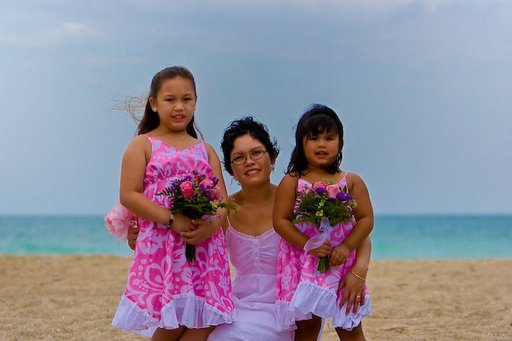
Paula A. Lujan Quinene and daughters
Paula Ann Lujan Quinene believes one of the best ways to share and help others understand a culture is through tasting the food. It is this philosophy that this native born Chamorro from Guam adopted when she penned the book “A Taste of Guam.”
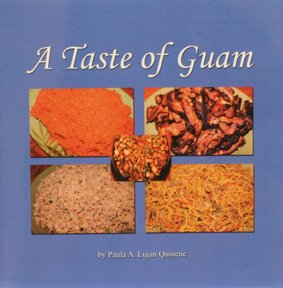
A Taste of Guam
Originally published in 2006, by Infinity Publishing, Quinene has been able to provide some of the recipes to some of Guam’s most mouth watering dishes that have graced an island fiesta buffet or family dinner table. The recipes are easy to follow.
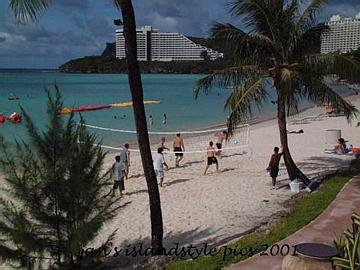
Guam
Among my favorites are some of the sweets I enjoyed in my childhood like guyuria ( fried cookies with dusted with sugar syrup) or Latiya ( pound cake with custard and cinnamon). There are also famous Guam barbecue recipes that are sure to please any palate as well as a host of other types of recipes.
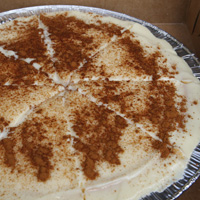
Latiya
Here is a sneak peak at the recipe of my favorite Guam dish:
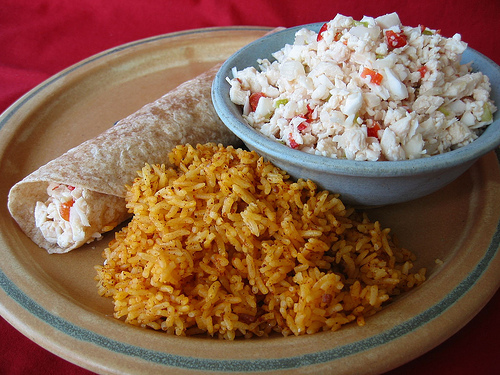
Chicken Kelaguen with Red Rice
CHICKEN KELAGUEN
(ke-la-gwen)
In general, kelaguen is more tangy than salty and can be moist or dry. It is quite versatile to eat with titiyas, tortillas, siopao dough, white rice and of course, bbq food.
INGREDIENTS / DIRECTIONS
Set 1 Set 2 Set 3
16 c. cooked, chopped chicken 6 T. lemon powder c shredded, fresh
2 c. chopped, yellow onion 2 t. salt coconut
3/4 c. chopped, green onion hot pepper
c. water
Tools: machete or cleaver, kamyo, large bowl
1. Combine the cooked chicken and onions in a large bowl. A
2. Add lemon powder, salt, hot pepper and water. Adjust to taste, should be more lemony than salty.
3. If using shredded coconut, add it to the mix and adjust to taste. B
4. Add more water if necessary.
HELPFUL HINTS
A. The chicken may be cooked using the following methods: boil, bake, bbq.
B. Crack the coconut in half by using a heavy duty knife to rap at the center of the nut. Rotate the nut in the palm of the hand after each rap. Use a kamyo (kum-dzu) to shred the coconut. Kelaguen is delicious with coconut, though it also tastes great without it. Keep in mind that in the fridge, kelaguen without coconut lasts longer than kelaguen with coconut.
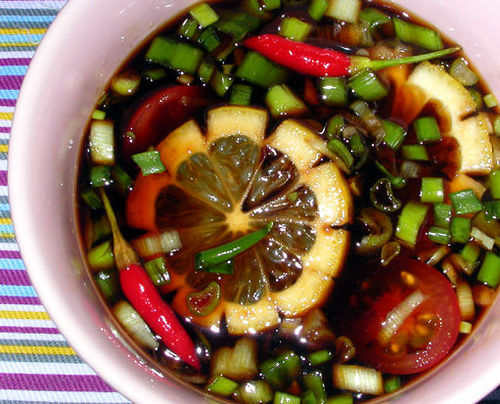
Finadene
Here is Paula teaching us how to make Finadene, Guam’s special sauce that you can dip your cooked meat into….it’s good stuff!
Making Buchi Buchi ( Fried Pumpkin Turnover)
Making Daigo
Quinene is an author , a fitness expert, and a mother who now resides in North Carolina with her family.
To order a Taste of Guam:
Other helpful links:
Paula Quinene’s Home Page: http://www.paulaq.com/index.html
I Love Guam Food: http://paulaq.blogspot.com/
 Tasithoughts' Weblog
just wondering what are the right measurments for the buchi buchi.
thanks
-camacho
-camachogeorgina@yahoo.com
Hi, just wondering what are the specific measurements of the Buchi Buchi. Thanks
Leonardo,
You can write Paula Quinene at pquinene@paulaq.com and I am sure she can help you. I wish you a Happy New Year!
JP
Pingback: Hot pepper dreams: starting to cultivate the Guam boonie pepper « Food Near Snellville
The passing of recipes seems to be skipping generations every year. I’m glad that there are books like these to help pass down this information.
Edel,
I agree.
JP
WHAT IS THE CONNECTION BETWEEN THESE RECIPES AND THE CHAMORRO “CULTURE” AS YOU PUT? I’M TRYING TO UNDERSTAND WHY FOOD IS SO EMBEDDED IN OUR CULTURE AND WHY.
Therese,
I am no expert but I believe we are such a tribal and communal people and that gathering together to interact with eachother has been so central to our culture. The meal has always been a place to tell stories in our families and to link generations. Our whole history has been passed down orally and most of it has been done while eating it seems when we gathered together in villages in the ancient past. Also, when Catholicism took over and was entrenched in the island, all major life events and village events surrounded huge celebrations with food. My two cents.
Thanks for reading my blog.
JP
In response to Therese Ataligs’s question re: connection between Guamanian recipes and the culture, I believe it is not just that individual familial history is imparted during meals but the ingredients were indigenous to the island and not imported. Earlier Guamanians raised their own pigs, grew their own vegetables, hunted for venison, fished for their seafood, Subsequently, they prepared these foods to suit their palate and passed down through generations and edited accordingly to what we now enjoy. Like family values, this “way of eating” is imbedded in each of us much like DNA thus the link between culture and Guamanian food. Thanks for allowing my input to this blog. Pilar Castro Eschan, Florida (Yona)
Thank you, Pilar. I appreciate your insight.
JP